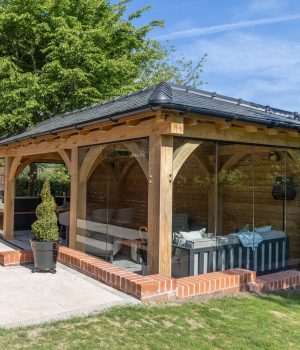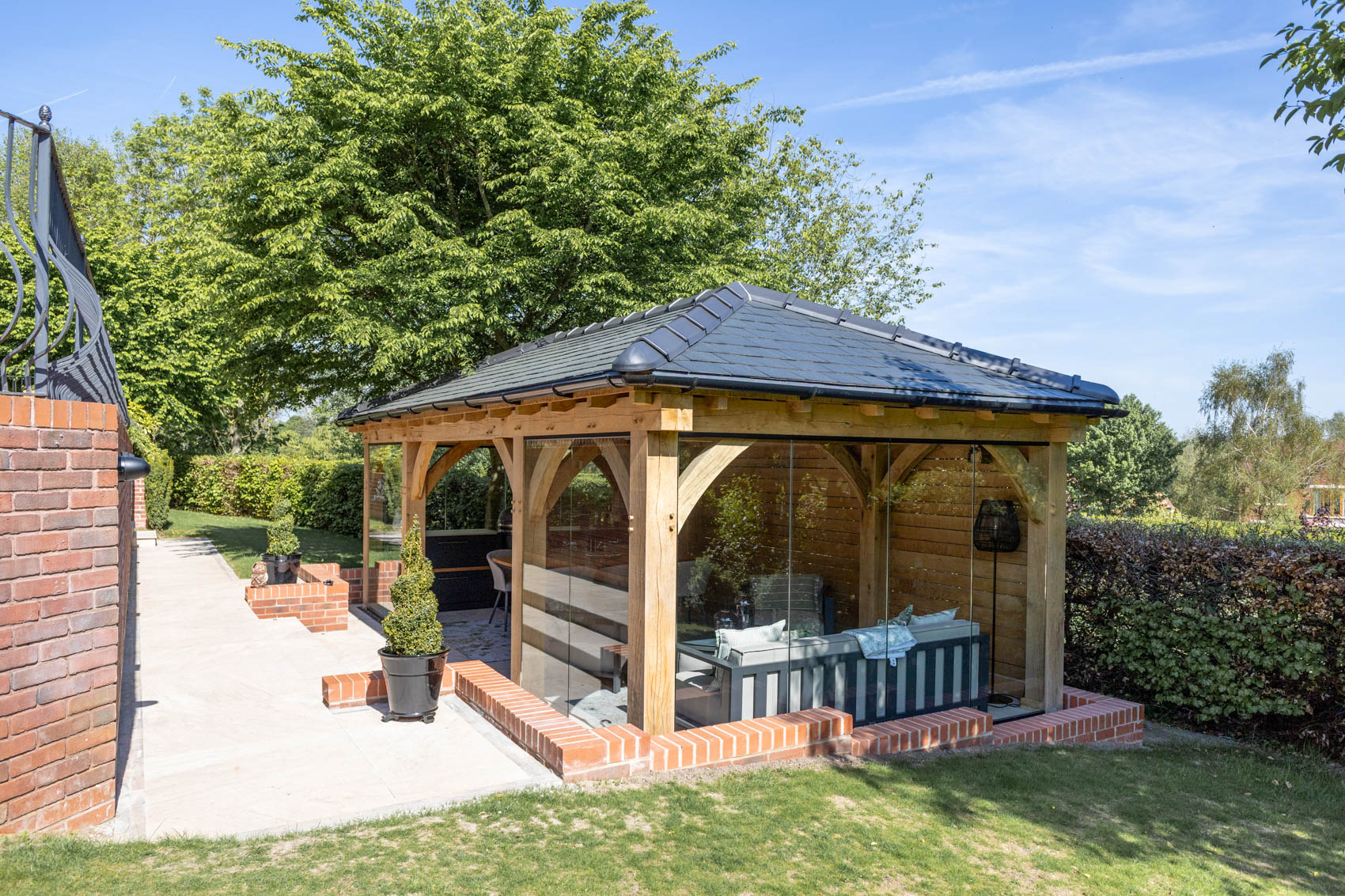
There’s something quietly powerful about an oak gazebo. It’s not just a garden feature, it’s a statement. A place to gather, to enjoy your outdoor space in the best way. But getting it right takes more than just choosing a design you like. Thoughtful planning and practical decisions are what turn a gazebo from a nice idea into a lasting asset.
Here’s how to approach it properly.
Why Oak?
Before diving into planning, it’s worth understanding why oak gazebos are so popular.. and for good reason!
Oak is incredibly durable, naturally resistant to decay, and ages beautifully. Over time, it weathers into a soft silver-grey, giving your garden a timeless, established feel rather than something newly “dropped in.” It’s also structurally strong, which allows for open, elegant designs without compromising stability.
In short: it looks better as it gets older, not worse.
Start with Purpose, Not Just Design
One of the most common mistakes is choosing a gazebo based purely on aesthetics. Instead, start with how you actually want to use the space.
Ask yourself:
– Is this for dining and entertaining?
– A covered hot tub area?
– A quiet retreat or reading space?
– A focal point visible from the house?
Your answers will shape everything: size, layout, positioning, and even roof style.
For example, a dining gazebo needs more internal clearance and space for movement, while a hot tub structure requires ventilation and potentially added privacy.
Positioning: Where It Sits Matters More Than You Think
Placement can make or break the impact of your gazebo.
Think about:
– Sunlight: Do you want morning light, afternoon shade, or sunset views?
– Wind exposure: Oak structures are robust, but comfort matters.
– Sightlines: What will you see from inside, and how will it look from your house?
– Access: Will you need a path, lighting, or proximity to the kitchen?
A gazebo tucked into a forgotten corner won’t get used. One that feels naturally connected to your home and garden will.
Size and Scale: Avoid Going Too Small
It’s tempting to keep things compact, especially if space is limited, but undersizing is a common regret.
A gazebo should feel open and usable, not cramped. Once you add furniture, movement space, and possibly features like lighting or heating, smaller structures can quickly feel restrictive.
A good rule: plan for more space than you think you need, especially if it’s for social use.
Foundations: The Unseen Essential
This is where practicality really comes in.
An oak gazebo is a substantial structure; it needs a solid, level base. Options typically include:
– Concrete pads
– Paving slabs
– Full patio bases
The choice depends on ground conditions and design, but cutting corners here leads to long-term issues like movement, drainage problems, or structural stress.
It’s not the exciting part, but it’s one of the most important.
Roofing Options: Form Meets Function
Roofing isn’t just about looks; it affects durability, maintenance, and how the space feels inside.
Common options include:
– Cedar shingles: Natural, premium look that complements oak beautifully
– Clay tiles: More traditional, often matching existing buildings
– Slate: Durable and elegant, but heavier and more costly
Consider how the roof will tie into your home and garden. A mismatch here can make even a high-quality gazebo feel out of place.
Practical Additions That Make a Difference
This is where your gazebo becomes truly usable year-round.
Think about:
– Lighting: Integrated lighting extends use into evenings
– Heating: Infrared heaters or fire features for cooler months
– Seating: Built-in benches vs flexible furniture
– Screens or sides: For wind protection or added privacy
– Electrical access: Plan this early – it’s much harder to retrofit
These aren’t luxuries, they’re what turn a structure into a space you actually use.
Planning Permission and Regulations
In many cases, garden structures fall under permitted development… but not always.
You’ll need to consider height restrictions, distance from boundaries and listed property or conservation area rules. All these details can be found in the Government guidelines.
It’s worth checking early rather than risking delays later. A quick confirmation can save a lot of hassle.
Think Long-Term, Not Just Immediate Impact
An oak gazebo isn’t a short-term feature, it’s an investment.
Over time, it will blend more naturally into your garden, add character and perceived value and hopefully become a central part of how you use your outdoor space, so it’s worth making decisions with longevity in mind rather than just immediate visual impact.
Final Thoughts
A well-designed oak gazebo doesn’t just improve your garden – it changes how you use it. It creates a destination, not just a backdrop.
But the difference between something that looks good and something that works comes down to planning and practicality. Get those right, and the result is effortless: a space that feels like it’s always belonged there.