Oak Orangeries & Conservatories

Bespoke Oak Orangeries & Conservatories – Supplied by Experts

Overview

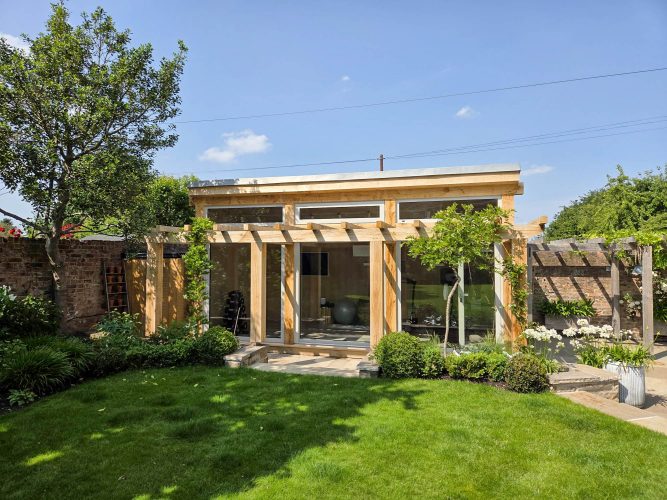
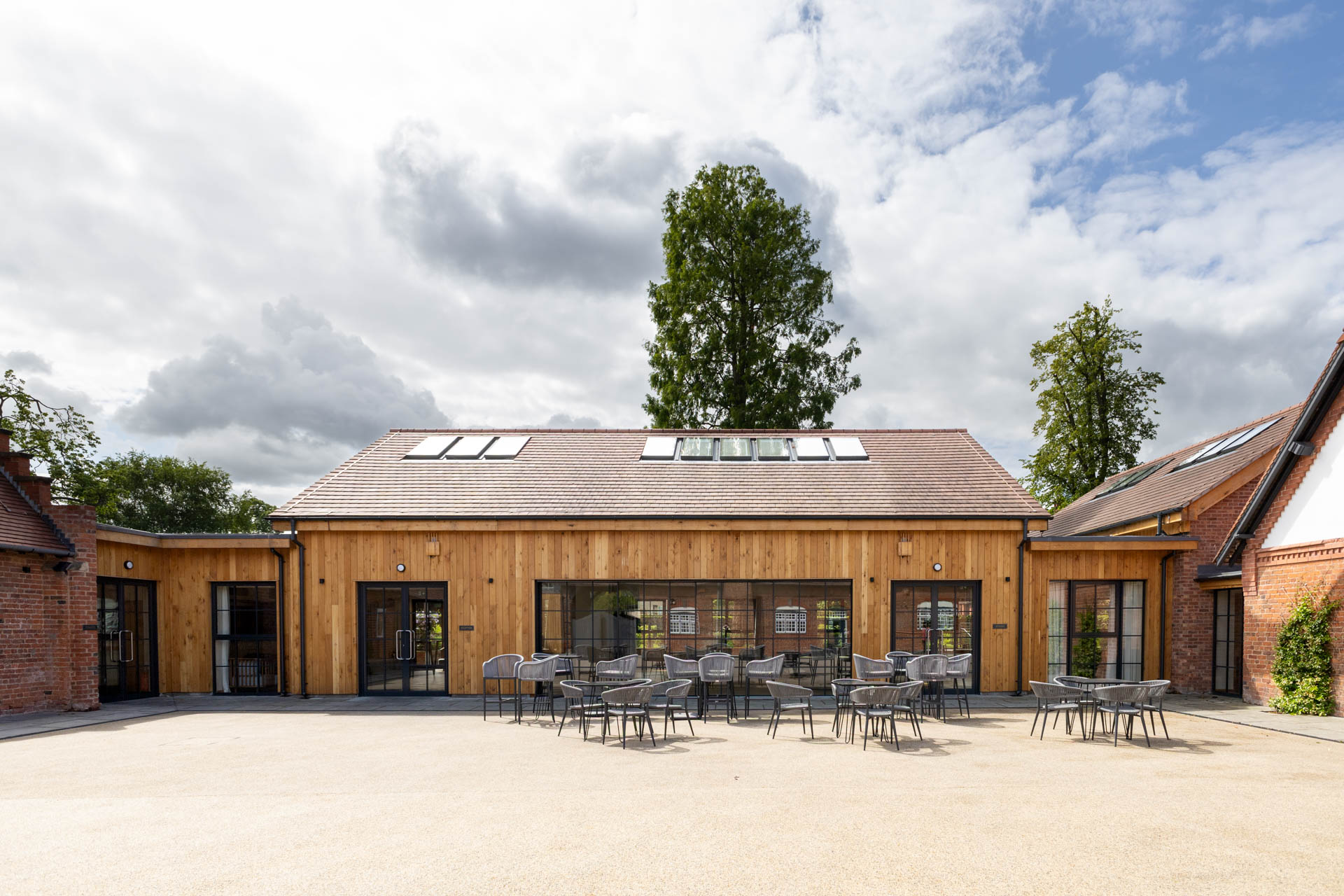
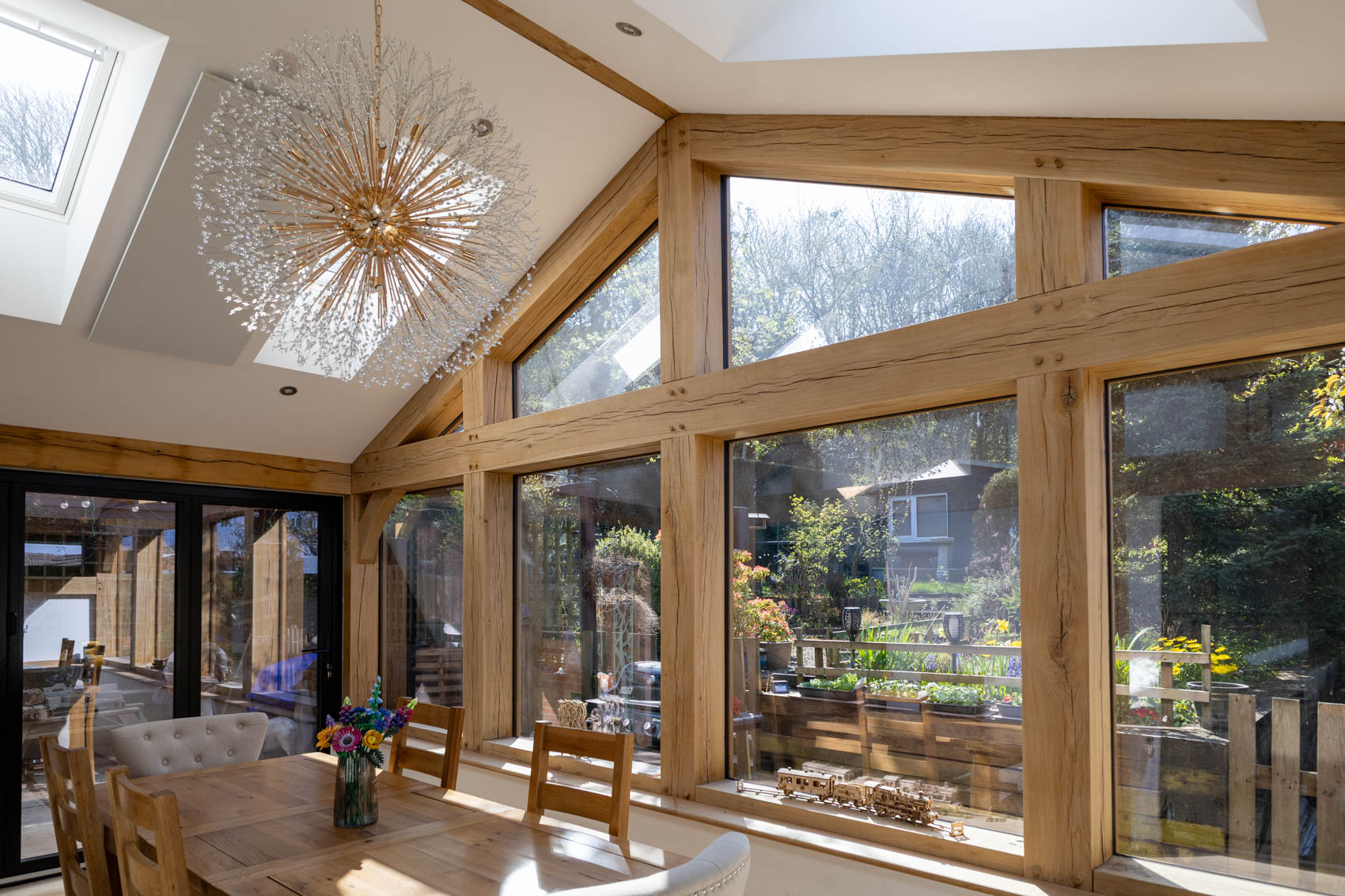
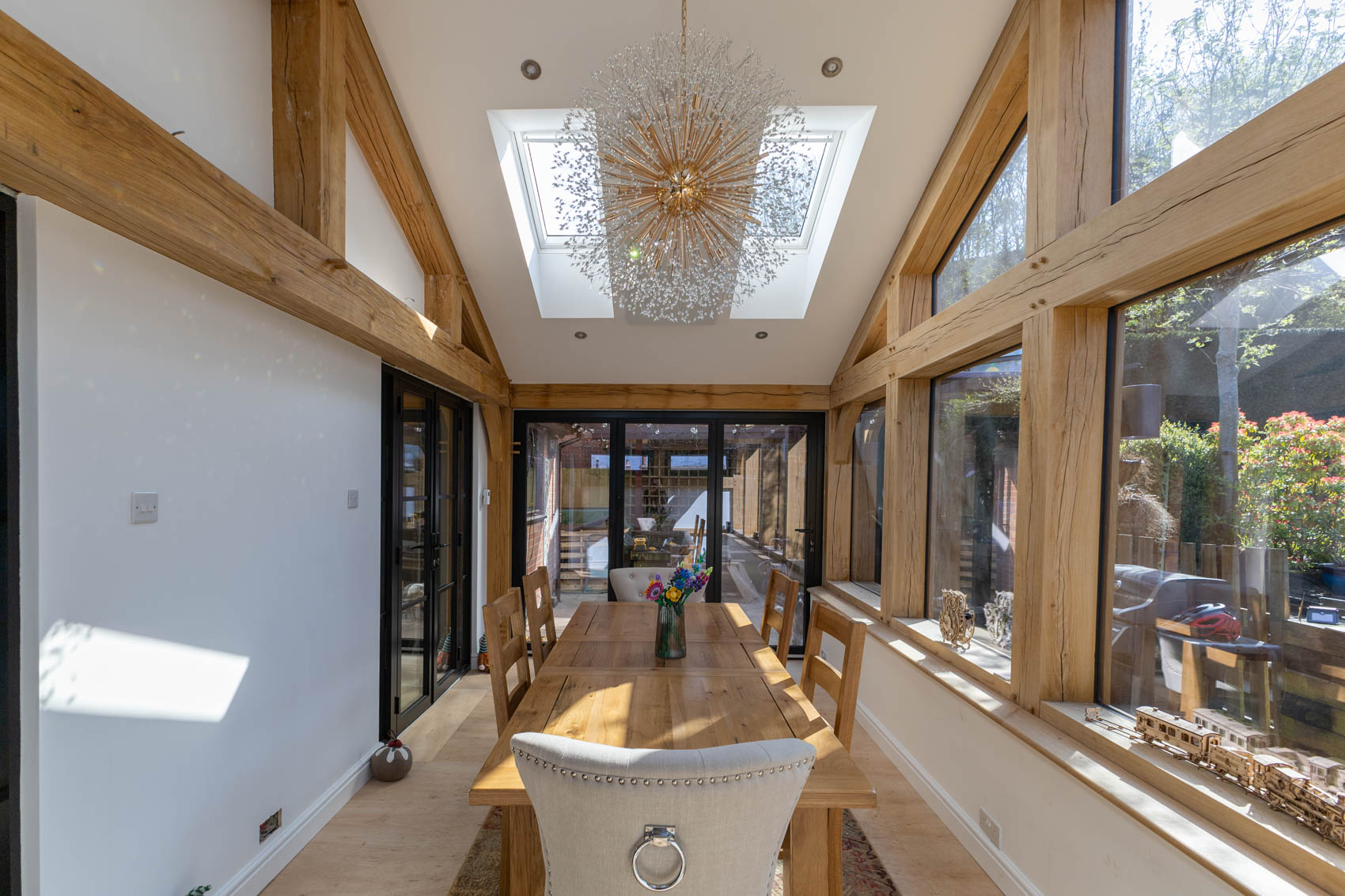
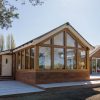
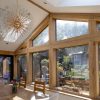
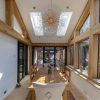
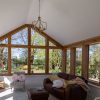
A handcrafted oak orangery or conservatory adds light, space, and lasting value to your home. At Hardwoods Group, we specialise in bespoke oak frame kits, crafted to your exact requirements and built from premium-quality, sustainably sourced oak.

We are a supply-only manufacturer – we do not offer installation. Our oak orangeries and conservatories are ideal for trade professionals and self-build projects, with every frame pre-designed for a smooth on-site assembly.

Precision-Crafted in the UK

Every oak frame is produced in our UK workshop, blending traditional joinery with advanced CNC precision. From upright posts to our proprietary oak glazing system, each component is engineered for strength, style, and long-term durability.

Designed for Self-Build Simplicity

Your final frame arrives ready for installation by your builder or contractor. We provide clear instructions and support to ensure a seamless build experience.

With their timeless design and natural character, our oak conservatories and orangeries create inviting, light-filled spaces that enhance both modern and period homes.

No two homes are alike – and your oak orangery or conservatory should be just as unique. That’s why we offer a fully bespoke design service, tailored to your property, layout, and requirements.

Our experienced design team uses advanced 3D CAD software to create detailed drawings that ensure every component of your oak frame fits perfectly. This precision allows for a smooth supply and installation process – ideal for both trade professionals and self-builders.

You can submit your own measurements and drawings, or work directly with our designers to bring your vision to life.

Ready to get started? Contact our team on 01244 377811 or upload your plans today.

Products details

Oak Orangery & Conservatory Kit Specifications

Our bespoke oak orangery and conservatory kits are fully customisable to match your vision and your building needs – ideal for trade supply and self-build projects.

Frame Materials:
– Choose from QP1-grade green oak (fresh sawn) or air-dried oak beams for added stability.
– Rafters can be specified in oak or softwood, depending on your project’s requirements and budget.

Glazing System:
– We recommend our proprietary oak capping system to keep your glazing watertight and secure as the timber naturally expands and contracts.

Cladding Options:
Available cladding styles include:
– Tongue & Groove
– Featheredge
– Shiplap

Brace Designs:
Choose between:
– Straight braces – clean and modern
– Curved braces – classic and traditional

Every kit is cut and prepared for easy installation by your contractor or build team. For guidance on choosing the right specification, speak to our design team.
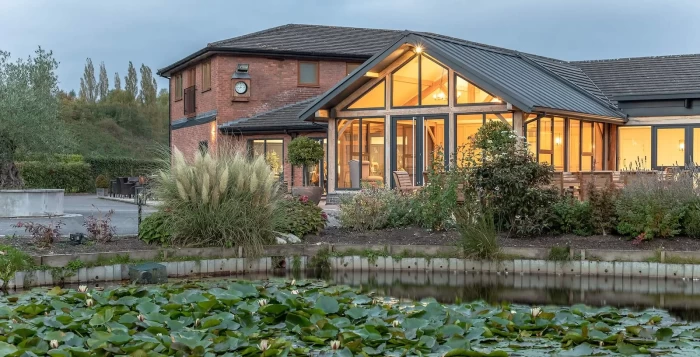
  1. Submit your bespoke requirements and get your free quote.
  2. Work with our in-house design team while they produce a 3D CAD drawing to check all the boxes of your specifications.
  3. Once approved, the frame design heads to production to meet our state-of-the-art 5-axis and 6-axis CNC Machines.
  4. After manufacture, our craftsmen check the frame for precision perfection.
  5. Delivered straight to your site in our popular DIY oak pergola kit, designed for easy installation.

If you’re looking for a high-quality, long-lasting, oak-frame pergola kit, our team is ready to bring your vision to life. Contact us today to begin your project!

1. Are orangeries warmer than conservatories?

Yes. Orangeries are generally warmer than conservatories because they use more solid walls, insulated columns, and often a partially solid roof. This reduces heat loss in winter and overheating in summer, making orangeries more comfortable for year-round use.

2. Are conservatories cold in winter and too hot in summer?

Traditional conservatories can suffer from temperature extremes due to high levels of glazing. However, modern conservatories built with high-performance glazing, insulated frames, and appropriate ventilation can remain comfortable throughout the year.

3. Are orangeries better than conservatories?

Orangeries are often considered better for homeowners wanting a more permanent, extension-like space. They provide improved thermal performance, a more architectural finish, and better integration with the main house compared to traditional glass-heavy conservatories.

4. Do conservatories devalue a house?

A poorly designed or unusable conservatory can impact buyer perception, but a well-built conservatory that adds usable space does not typically devalue a property. Quality materials, insulation, and integration with the home are key factors.

5. Do orangeries require planning permission?

In many cases, orangeries fall under permitted development, meaning planning permission is not required. However, permission may be needed for listed buildings, conservation areas, or larger structures. Professional guidance ensures full compliance.

6. Do conservatories require foundations?

Yes. Conservatories require foundations, although they are usually less extensive than those needed for full extensions. Foundation depth depends on ground conditions, size, and building regulations.

7. Does an orangery need foundations?

Yes. Orangeries require proper foundations to support the structural oak frame and ensure long-term stability. Foundation depth depends on ground conditions, size, and building regulations.

8. Which is cheaper: an orangery or a conservatory?

A conservatory is usually cheaper upfront. However, an oak orangery offers greater longevity, usability, and property value, making it a better long-term investment despite the higher initial cost.

9. What is the average lifespan of a conservatory?

The lifespan of a conservatory depends on materials and build quality. uPVC conservatories typically last 20–30 years, while timber and oak conservatories can last significantly longer when properly constructed and maintained.

10. What is the lifespan of an orangery?

A professionally built oak orangery can last 80 – 100+ years. Oak naturally strengthens as it ages, and with correct design and construction, it far outlasts most modern extension materials.

11. Are orangeries cold in winter?

A well-designed orangery should not be cold in winter. With insulated foundations, high-performance glazing, and proper heating, modern oak orangeries maintain comfortable temperatures throughout the colder months.

12. Are orangeries worth it?

For many homeowners, yes. Orangeries add usable living space, architectural character, and often increase property value. Their durability and year-round comfort make them more than just an aesthetic upgrade.

13. Can you put an orangery roof on a conservatory?

In some cases, an existing conservatory can be upgraded with a solid or orangery-style roof, but this depends on the original structure and foundations. A structural assessment is essential before any conversion.

14. Do orangeries add value or devalue a house?

A high-quality orangery adds value rather than devalues a property. Unlike poorly insulated conservatories, orangeries are viewed as permanent living space, which appeals strongly to buyers.

15. Is it worth replacing a conservatory roof with a solid or tiled roof?

Replacing a glass roof with a solid or tiled conservatory roof can significantly improve thermal performance and year-round usability. Whether it is worthwhile depends on the existing structure, foundations, and compliance with building regulations.

Get in touch about your bespoke project!
Call us today
Get in touch with us