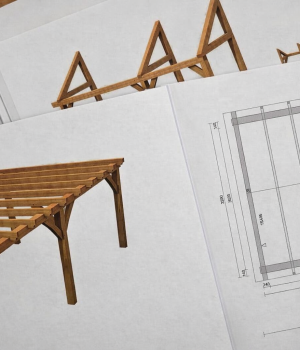
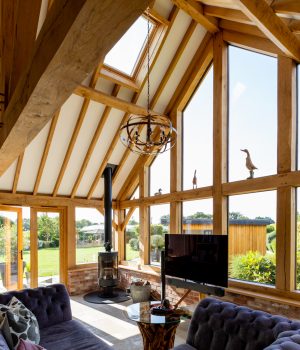
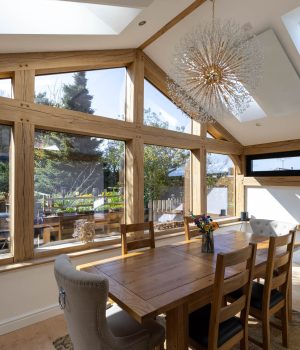
Oak frame buildings are beautiful, timeless, and increasingly popular for extensions, garages, garden rooms and even new homes. But before you place your order or raise a single beam, it’s essential to understand the planning permission rules in England – because if you get it wrong you can face enforcement action and costly redesigns.
We would always recommend looking at the official guidance on when planning permission is required, this can be found on the GOV.UK page: When is planning permission required?.
What Is Planning Permission?
Planning permission is consent from your local authority that allows you to carry out “development” – usually the construction of a new building or significant alteration of an existing one. Most building work that changes how a property looks or how land is used is classed as “development” unless a specific exemption applies.
However, not all projects require planning permission, many fall under Permitted Development (PD) rights (more on that below).
Does an Oak Frame Material Affect Planning Permission?
No – the fact that a structure is oak-framed does not itself determine whether planning permission is needed. Whether you’re using oak, steel, brick or timber, the planning rules focus on size, location, use and impact, rather than the specific material.
Permitted Development (PD) Rights
Many smaller oak frame structures can be built without formal planning permission under your household’s PD rights, but only if they meet specific conditions.
Outbuildings such as oak garages, garden rooms or storage buildings within the curtilage of a house may be permitted development if they meet size and location limits.
Typical PD limits for outbuildings include:
– Single-storey only
– Maximum height of 4m for dual-pitched roofs, and 3m for other roofs
– Eaves no higher than 2.5 m
– Must not be in front of the principal elevation of the house
– The total area of all outbuildings must not cover more than 50% of the land around the original house.
Important: PD rights only apply to houses — they do not automatically apply to flats, maisonettes or commercial buildings.
When You Do Need Planning Permission
You will need planning permission for oak framed buildings if:
1. It’s a new dwelling
A standalone oak framed house, even eco or timber, always needs full planning permission.
2. It’s in a protected location
If your property is in a Conservation Area, Area of Outstanding Natural Beauty (AONB), National Park, Green Belt or a World Heritage Site, PD rights may be restricted or removed; meaning you must apply.
3. It’s attached to the house and exceeds PD limits
Large extensions, buildings that exceed the size or height limits above, or those placed too close to boundaries or forward of the house will require planning permission.
4. Your rights have been removed
Your local authority may have placed an Article 4 direction on your street or property, removing some or all PD rights, therefore requiring applications even for smaller developments.
How to Check and Apply
1. Check Your Permitted Development Rights
Not all properties have full PD rights, particularly in conservation areas or where an Article 4 direction applies. Always check with your local authority first.
2. Apply for Planning Permission (if needed)
You can submit applications online via the Planning Portal: https://www.planningportal.co.uk/applications
Applications usually take around 8 weeks for householder developments, and you must be prepared with drawings, site plans and elevations.
Building Regulations vs Planning Permission
Planning permission controls whether you can build.
Building Regulations control how you build: covering structure, fire safety, insulation, drainage, ventilation and more. You often need both approvals for oak frame buildings.
For building regulations guidance, visit GOV.UK: https://www.gov.uk/building-regulations-approval
Top Tips Before You Start
– Contact your local planning authority for pre-application advice — it’s informal but valuable.
– Consider a Lawful Development Certificate if you’re sure the build is PD — this provides legal clarity and protects future sale value.
– Engage an architect or planning consultant early — it can save time and money.
Sorted planning and ready to start your project? Get in touch with our design team!